



Lonely Kids, Screens, and the Power of Secure Attachment
Posted in: Multimedia, Podcast
Topics: Child + Adolescent Development, Digital Media, loneliness, Parenting
Gen Z now reports higher rates of loneliness than any other generation, and parents are more worried than ever about social media. So what actually protects young people: screen time limits, phone-free schools, or something else? The answer may be one we’ve known about for decades: secure attachment, and its power to protect kids against loneliness.
In this episode, child and adolescent psychiatrists Gene Beresin, MD, MA, and Khadijah Booth Watkins, MD, MPH, make the case for a secure, trusting bond between a child and the adults who raise them.
Gene and Khadijah explain what secure attachment is, how it develops, and why it’s never too late to build. They walk through the U.S. Surgeon General’s advisory on loneliness and describe how loneliness shows up differently in young children and teens, from clinginess and stomachaches to withdrawal and “nobody likes me.” They explore how secure attachment helps protect kids against both loneliness and social media misuse, and why social media isn’t all bad. They also name the online stressors parents should know about, including FOMO, ghosting, catfishing, and constant comparison.
The episode closes with everyday ways to strengthen connection at home: slowing down, naming feelings, repairing after mistakes, and asking kids to “walk me through your day.” Gene and Khadijah also share where they land on screen time limits and phones in schools, and they talk about the people who were secure bases for them growing up.
Media list
- Secure Attachment: Its Role in Preventing Loneliness and Misuse of Social Media, by Gene Beresin and Masha Mesyef (Clay Center blog)
- U.S. Surgeon General’s advisory on the epidemic of loneliness and isolation (May 2023, archived)
- Research on what secure attachment supports, from cognition to resilience
- Study on teens’ need for bonding, trust, and attachment
- Study linking insecure attachment to social media addiction
- Study on secure attachment, addiction, and mental health
- Teen Romance and Breakups in the Digital Age: Navigating the World of Ghosting, Blocking and Harassment(Clay Center blog)
Related episode
- Teen Romance in the Digital Era (Shrinking It Down)
[00:00:00] [Music]
[00:00:29] Gene: Welcome back to Shrinking It Down. I’m Gene Beresin.
[00:00:33] Khadijah: And I’m Khadijah Booth Watkins.
[00:00:35] Gene: We’re two child and adolescent psychiatrists at the Clay Center for Young Healthy Minds at the Massachusetts General Hospital. Now, as the Beatles sang in “Eleanor Rigby” in 1966 (I won’t tell you how old I was then), in their wonderful album Revolver: “All the lonely people/Where do they all come from/All the lonely people/Where do they all belong?” So it’s a question that feels more relevant and urgent now than ever before, because Gen Z now reports the highest rate of loneliness of any generation.
[00:01:08] Khadijah: You know, and at the same time, parents are more worried than ever about social media, especially with what has just happened with the lawsuits against Meta. So we have a lot of caregivers asking a lot of questions. You know, what actually protects young people from all of this? Is it the screen time, how much time they’re on the screens? Is it really making schools phone-free? Or is it something else that we haven’t talked about or thought about?
[00:01:32] Gene: We can talk about all those things, but let’s talk about another answer we’ve known for decades, and that is the power of a secure, trusting bond between a child and the adults who raise them. That is a secure attachment. And what I think we should do is try to explore this notion of loneliness and social media: how it develops, and how secure attachment is protective. And it protects against both, even when life gets in the way.
[00:02:02] Khadijah: So to start us off, Gene, we need to know: what exactly is a secure attachment? You know, what does it look like in a young child versus, like, a teenager? And why does it matter so much? So help us connect the dots.
[00:02:13] Gene: Secure attachment is an emotional bonding based on safety, trust and responsive caregiving that promotes healthy, intimate relationships and, at the same time, independence. It fosters a positive belief in oneself, that is, being worthy, and a positive view of the world.
We humans are pack animals. We need each other. We need relationships. Now, my favorite psychiatrist of all time, Donald Winnicott, said that we need both a biological endowment, which means, as a pediatrician, you know, we need to be healthy, physically healthy, but we also need what he called a facilitating environment. And that’s where relationships take place.
So what do secure attachments do? They are effective in our thinking, in emotional flexibility, in feeling safe and secure, in self-regulation and managing our own feelings and behavior, and in the capacity to form intimate and healthy interpersonal relationships, as well as empathy. They also help us become more self-aware of our own behavior and our own identity. And they’re super important for resilience. That’s a lot. And it’s more than any parent could want for our kids. Kids with secure attachments handle stress better. They bounce back from adversity and setbacks. They have close friendships, and they know themselves more clearly.
So, Khadijah, how does this happen? Dan Siegel, who was actually my first medical student way back when (yeah, I mean, that’s a long time ago), described secure attachment as a gradual process that’s grounded in the first three years of life. I might add that, you know, while the first three years are critical for secure attachments, there’s always a chance at what he calls earning a secure attachment later on, but we can talk about that. But what does this look like between parent and child? And what about parents of older kids and teens, when they have a second chance?
[00:04:17] Khadijah: So it looks like different pieces. There are many different components to what I think forms a secure attachment. And one of the components is really this idea of collaborative communication, which is really just you as a parent or the caregiver or the trusted adult being attuned to your child or your young person’s experience, their emotions, and just being aware of them. And then there’s the other kind of way to think about it, which is really kind of the reflective dialogue. So now you’re not just being aware of your child’s kind of emotions or behavior or state, but you’re also now trying to understand it. And so I think these are two big components.
And through this, we are, you know, being curious, we’re actively listening, we’re trying to understand not from a place of judgment and criticism, but really from a place where we’re trying to understand and be aware. And then this idea of being attuned or connected can really also be helpful, because you’re also now kind of creating space and language to be able to help your child, especially the younger ones, who can’t even identify the emotions or the feelings that they’re experiencing. You’re helping them kind of identify them, because sometimes young people aren’t even aware of what they’re feeling, but they know that they’re feeling maybe dysregulated, or they know that they’re feeling not themselves. And so by being attuned and aware, you can help them by kind of calling attention to what they’re feeling or what they’re experiencing, or maybe trying to have a kind of dialogue about it.
So now, that is all to say, we don’t always get it right. As we’re having these conversations, as we are putting on our kind of parental hats and trying to interpret what’s going on with our kids, we sometimes get it wrong, or we’re off base a little bit. And sometimes this can kind of create this little rift in the bond. And so also, as part of a secure attachment, we have to be able to kind of repair and kind of make things right again. We are teaching kids that we are a safe place. Like, we are listening, we’re open, the floor is yours, basically, to be able to have conversation. And also that we’re not above kind of acknowledging that we are not always kind of immune to making mistakes, and we can repair, and we can apologize, and we can make things right. So these are some of the main components, I would say, of what it takes to build a secure attachment.
And it’s all, again, really important. It’s important to think about what attachment is, but also, as kids go out into the world and begin to attach and connect and build their own community, they first get their sense of what it’s like to be in a healthy relationship and securely attached from what happens at home. And so this is why attachment is so important as we begin to talk about loneliness and community and connection.
Now, I’ve also mentioned that a lot. So as I just kind of mentioned loneliness, as we’re thinking about loneliness and how lonely our youngsters are right now, the U.S. Surgeon General put something out in 2023, I think it was, about this public health crisis around loneliness. And he had a lot to say about what he thought was going into it and what we should do. But why is it so hard for us to help our young people kind of figure out how to get out of this kind of loneliness epidemic?
[00:07:10] Gene: So on May 3rd, 2023, Vivek Murthy released an advisory calling loneliness a public mental health crisis, along with a lack of connection in our country. And he noted that social connection is critical, but is an unappreciated and unrecognized source of overall health, community safety, and resilience. Now, about half of U.S. adults report loneliness. But interestingly, it used to be that the elderly were the loneliest generation, but since the late ’70s, it’s been escalating among young people. And now Gen Z is the loneliest segment of our population. So he put in the advisory: invest in your relationship with your child or loved one by recognizing that strong, secure attachments are protective and a good foundation for other healthy relationships. But he didn’t say how to foster these attachments. And that’s what we’re going to get into today.
[00:08:14] Khadijah: So then let’s follow up on that. Kids and teens don’t always tell us that they’re lonely. And sometimes they can’t even recognize that what they’re feeling or experiencing is loneliness. And so how can a parent tell if their child is lonely? Like, what does it look like? And does it look different for a little kid versus a teenager? And as we always really, really want to know, like, when should we be concerned as parents if our child is lonely?
[00:08:36] Gene: So first of all, loneliness is a perceived mismatch between the relationships that one has and those that one desires. It’s painful. It’s a feeling of disconnection, of isolation, and it’s very, very stressful. Now, it’s very different from being alone. I mean, you can be lonely in a crowd. You can be lonely when you’re feeling dismissed by other people. And aloneness, though, is actually an emotional achievement. So for example, as Winnicott, my favorite psychiatrist, said, aloneness is an emotional achievement. It’s the ability to be by oneself, to enjoy oneself, to recharge, and to enjoy solitude. And so loneliness is very different.
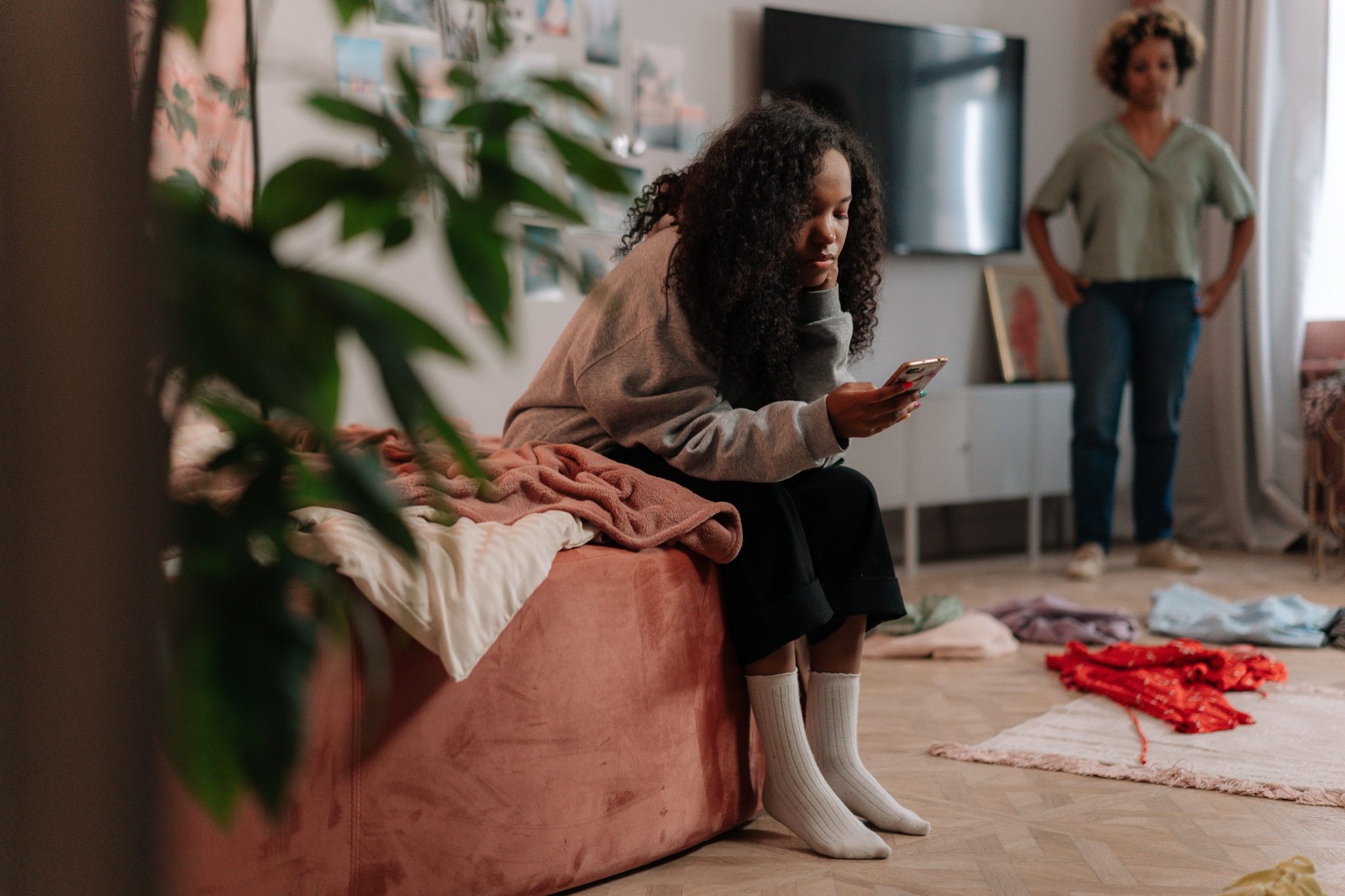
In younger children, loneliness might appear by their being more clingy, by their whining or complaining or being irritable, by sleep problems, or by physical complaints like headaches or stomachaches, refusing to go to school because they feel sick. In teens, one might see withdrawal or dropping friends, spending lots of time online because that’s where they may find connection, even if it’s with an AI bot, which is another big issue right now. They may be irritable. And they may have the perception, which is probably false, that “no one likes me, everyone hates me.” So they may have negative thoughts about other people that may or may not be valid or real. So it’s really a matter of perception. Loneliness is not necessarily a fact. One can be on a sports team and have a lot of peers playing and really enjoying you and enjoying each other. But the perception is, “I’m alone, I’m detached, I’m isolated,” and it’s very painful.
And it can affect the immune system. It can weaken the immune system and [increase] inflammation. In the older population, in adults, it’s associated with heart disease, diabetes, and premature death. Loneliness is a serious matter in terms of physical health as well as mental health. If it lasts for a longer period of time, it can bring about sadness, hopelessness, helplessness, and even suicidal thinking. And if it does, one needs to get help for that child or teenager.
So now, Khadijah, how does secure attachment protect against loneliness? If a teenager, let’s say, is left out of a group chat or shows up to find that plans changed, what does a securely attached teen do differently than one who’s insecure?
[00:11:24] Khadijah: So when we think back to those components and this whole idea of “I’m listening to you, and I’m connected to you, and I want to understand you,” we have, as caregivers, established this platform or space that feels open, that feels safe, and that kind of promotes communication. That’s really important, because if we don’t know, we can’t act and protect our young people. The first way that secure attachment protects kids is that kids are now more willing and more likely to talk to a parent if they’re struggling with feeling alone or feeling left out or feeling like they need some sort of reassurance. So the door is open for kids to have these conversations with their parents. I think that’s probably the biggest kind of advantage that kids with secure attachments have in terms of battling loneliness.
The other thing I think about is, especially as our kids get older and they’re more likely to try to manage things on their own, when they get to a point where things are maybe more concerning and they need more help, again, back to this idea, they’re more likely to not worry alone. They’re going to bring in an adult. They’re going to pull someone to the table to help them problem-solve, think things through, or get additional help if that’s what they need. But again, this sense of connection and attachment and just security, I guess, for lack of a better term, or safety at home, allows them to be better able to navigate these spaces out in the real world when they’re navigating them with their peers or other adults.
And this idea that you mentioned earlier, that we can tolerate some alone time and some downtime, and that’s okay, and that’s actually healthy to be able to do that. They are learning this through their interactions and their connections with their primary caregivers at home. And so through their secure attachment, they’re just better able to navigate some of the things that could potentially be distressing to some kids, like this idea of having to be entertained and engaged at all times. Kids who have secure attachment can tolerate being alone for a stretch, and it doesn’t turn into chronic loneliness, which is really what has happened when we think about the epidemic: the sense of chronic loneliness, and it’s just kind of never-ending.
But with that, and again, with social media and how we may think that it does or does not contribute to this, parents and clinicians are all really worried about what’s happening with Meta right now. Where does secure attachment fit into this conversation as we’re thinking about the role of social media and loneliness?
[00:13:45] Gene: It’s super important. But, you know, there are two sides of this concern about social media. One is the tech giants who have been, like in the Meta case, designing social media to be habit-forming, and that is, they’re marketing to, they’re targeting, teenagers who are vulnerable. That’s one problem. And then there’s also the issue of how teens as well as adults can misuse social media by bullying, by excessive texting, by ghosting, by, you know, catfishing.
Research is limited, but the evidence suggests that secure attachments reduce vulnerability to misuse. And so one study linked insecure attachment to social media addiction, with social supports outside of media acting as a mediator. Those are the teens that may go to AI, using chatbots or companion bots or therapy bots. And there’s a lot of data to show right now that they are sketchy at best. Another study found that secure attachment was associated with fewer mental health problems, and that it could prevent social media addiction.
Secure attachment gives a teen a sense of connection that’s not dependent upon a screen. So you don’t need the screen for validation, and you don’t need social media to validate yourself, or for emotional regulation, or for relief from negative feelings. And this is very much like what Seligman, the father of positive psychology, talked about in terms of the framework for well-being: positive emotions, engagement, relationships, meaning, and accomplishment. Secure attachment can provide that without the use of social media.
We don’t want to demonize social media either. For many kids, it’s a genuine source of connection. So how can parents think about the difference between healthy use of social media and a device used to fill a gap that can’t be filled in other ways?
[00:15:51] Khadijah: I think this is really important, because it’s not all bad. And I think we have to remember that, especially for kids in marginalized groups who are trying to find their community, trying to find their people, trying to find a space where they fit in, especially depending on where you are in the world, that might really only be, or largely be, through social media platforms where you can kind of get a quorum of kids. But I really encourage parents to think about this more broadly, like, not just about the number of minutes or hours that they’re on a screen, but what do we want them to be doing? Are they going to school regularly? Are they keeping up with their coursework? Are they doing things in person with other kids? Are they going on playdates? Are they playing sports? Are they doing a club? Are they playing an instrument? Are they doing other things that require them to be in person? Are they choosing to be at home on the video game or online when they’ve been invited to go out to the mall or to the movies, or whatever kids do these days, walking in the park? Are they prioritizing what’s happening in front of them? Are they sleeping at night? Versus, you know, kids who are on screens and online, and the time that they’re spending is getting in the way of them being able to sleep soundly at night. So what is their level of functioning, and is the phone, the device, getting in the way of it? That’s the way I encourage families to broadly think about it.
But again, if you have a child who is online, even if they’re spending just a little bit of time online, every time they’re online, are they feeling bad about it? And this is where, you know, these conversations come in: having these conversations frequently, and having the space to be open to have this dialogue about how you’re feeling when you’re online. What platforms are you using? What apps are you using? And if your child or young person is saying that every time they go online, it makes them feel anxious, sad, afraid, this is when we know that the device is a problem. And again, I don’t think it’s time-dependent per se. Definitely, I think there’s a limit on time. I think they might be saying maybe it’s more than four hours a day. But again, we use online resources for so many things other than just kind of socializing. Like, kids are using it to complete coursework, to do research, to find jobs. You know, we’re now in the process of kind of filling out college applications and financial aid forms. So all device and online use is not created equal. It’s a matter of thinking about what the use is for, how it’s getting in the way, and also how they’re feeling when they’re online. And so that’s a good dialogue.
[00:18:07] Gene: Yeah, absolutely right. It’s not a matter of time, because I think some national organizations have argued for, like, two hours a day of social media use. But you’re right. If a kid’s using it for a group project, or if they’re looking things up and they’re doing schoolwork on it, it’s not a matter of time. It’s a matter of how it functions. So the question is, how can we start having conversations with kids and teenagers, as well as young adults, and, by the way, with our own partners? Because there’s a lot of research to show that parents actually are not great role models for this.
[00:18:48] Khadijah: We’re the biggest role model. We’re the ones that they’re seeing, like, on a day-to-day basis, and they’re seeing our relationships with social media and devices.
[00:18:57] Gene: Right. And when they see us texting them, knowing that they’re in the car driving, I mean, with teenagers, it’s not the right thing to do. So what stressors should parents know about in terms of social media? And what kind of questions should we be asking them about their use of social media?
[00:19:21] Khadijah: I mean, so I think we have to get over this idea of not wanting to be too intrusive or too overly involved. It’s okay to ask the question. We have to ask the questions in order to know what our kids are doing, what they’re using. So it’s okay to ask: What platforms are you using? Who are you talking to online? How much time do you think you’re spending online? Again, I think some of this is helping them to build awareness, because I think there was a period of time where I was like, “Do you know how much time you’re using? Let’s pull up the app and let me show you. This weekend alone, you spent this much time online.” And so sometimes they just aren’t aware. Like, the time passes by so quickly. But then it’s also about helping them to become more aware and to identify how they’re feeling when they’re online, and talking about the fear of missing out, or FOMO, which is so much more relevant now that you can kind of see everything that’s happening around you that you’re not included in. You can kind of see when your friends have ghosted you. You’ve been calling, asking what’s going on this weekend, and then you go online and you see that they’re all at the mall, or they’re all at a birthday party that you weren’t invited to. Or people doing things that are actually deliberately and directly more mean-spirited, like the whole catfishing thing, pretending they’re someone else, being more predatory. Those things can really be hurtful and really make kids feel badly. And then I think what we all kind of can sometimes fall victim to is just constant comparison. Comparison is the killer of joy and happiness. And so just kind of comparing yourself to people online can be really, really difficult. And then there’s the bullying. Bullying has just taken on a new form, in terms of whether it’s alienation, whether it’s name-calling, or whether it’s direct threats and such online. So there’s so much that kids are concerned about and should be concerned about, and we want them to talk to us about it if they’re experiencing it.
So with that, what parents really, really, really want to know is, like, what can they actually do on a day-to-day basis to really nurture these attachments and make their kids, their teens, feel safe to talk to them about whatever’s going on with them? And then, in the way that we do it at the Clay Center, what are the three W’s that parents need to be thinking about, in terms of when to worry, what to look for, and what to do? What are some examples that they can kind of actionably put into place in real time?
[00:21:31] Gene: Well, I think we need to have frequent conversations that begin early on. I mean, even with preschoolers. When you see a child, teenager, or young adult that’s upset, slow it down, get on their level, name the feelings, match the tone before jumping into solutions. You know, ask them exactly what they’re experiencing and feeling. Validate their feelings. I mean, their feelings, even if you think that their feelings are overly dramatic or unrealistic, are real to them. So they need to be treated with respect and with dignity and in a nonjudgmental way. And don’t just jump to give them advice, because that is [problematic]. I would ask them, “Well, what do you think could be done?” Involve them in a mutual conversation, because it’s about mutuality. I mean, this gets back to the issues of secure attachment. We want a collaborative, reflective conversation that’s emotional and that reflects what’s actually going on. And if we get it wrong, we want to make repair. Those are the elements of secure attachment. So let’s put those into action when we actually talk with our kids, our teens, our partners, and family members.
And so I would ask them open-ended questions about their day and sit down with the whole answer instead of moving straight to advice. And again, if you get it wrong, there’s such power in apology. You know: “Geez, I didn’t get it right.” You know, it’s often a great technique to say, “Let me get it straight. What you’re saying is…” and then just try to mirror what they’re saying and see if you’re right, if you get it, or if you need to be corrected, and then let the teen correct you.
And I would also try to focus on the positives rather than the negatives, and the positive moments that they’re having. You know: “I love when we all laughed together about such and such.” “I enjoyed watching you when you were in that incredibly crazy Halloween costume. Remember that one? It’s probably still in the closet someplace.” I mean, family narratives are super important, and a lot of conversations about adversity and about connection and about repair and about mistakes, you know, are historical, and they’re very, very useful. And, you know, help them build narrative skills, because the ultimate outcome of secure attachments, which we didn’t mention but is super important, is that we all have to carry around what are called autobiographical narratives. And that is, you have a continual storyline about your life, your family’s life, and it has to be interconnected, and it’s coherent, and it makes sense. You know, narratives are really the heir of secure attachments through conversations. So I would ask for stories, like: “Walk me through your day. What happened today? How is it all connected? What made you feel great, and what didn’t make you feel so great?”
So now, all of this isn’t easy. It takes time, and it takes practice. But, you know, Khadijah, what would you say gets in the way for families? What about parents who didn’t have secure attachments themselves when they were growing up? How do they navigate these waters?
[00:24:55] Khadijah: This really is about acknowledging or recognizing that we all bring something to the table. And maybe what we bring to the table is that we didn’t have, you know, good examples of secure attachments. Or it wasn’t until later in life that we started developing more secure attachments. And so we think about some of the things that were part of our earlier childhood and growing up: whether we had some adverse childhood experiences, whether we struggled with, you know, financial stability growing up, whether there was, like, a lot of conflict or domestic violence. You know, there are a lot of disparities that a lot of us have experienced growing up, whether due to race, discrimination, or immigration status. There’s so much that we potentially bring to the table that may get in the way. It doesn’t have to be a barrier, but it just has to be something that we acknowledge in order to kind of overcome it. But I think you often hear, “Well, this wasn’t done for me,” or “No one ever talked to me in this way.” And I think it’s just about relearning how to do things differently to meet the needs of your child or your children. Every child is also different. So the way that you communicate and talk to one is going to be very different from the needs of another. And I think, you know, that’s all okay, but it starts with just kind of recognizing and identifying where we are. And there’s nothing wrong with that, because none of this is really going to be easy. And so, again, it’s a work in progress.
And so, as we are bringing all of this together, and, you know, we talked about whether it’s screen time limits, whether it’s phone-free schools, where do you land?
[00:26:19] Gene: I would say that it’s how the media is used rather than any specific time limits or phone-free schools. As a matter of fact, I think putting limits on time, for example, is problematic, because if a teenager, for example, is doing a group project and they’re on the screen for three or four hours working on that project together, that’s probably a really good use of that time. They’re researching, they’re collaborating, they’re writing together, and, you know, it shouldn’t be limited. If it’s limited to two hours a day, as some organizations have recommended, that’s ridiculous.
I’m in favor of actually allowing smartphones and tablets in schools, provided that the kids learn how to use them and put them down, for example, when the teacher is talking, when there’s a group discussion. And the rules are community-policed. If a kid is scrolling and shopping or looking at YouTube in the middle of class, other kids who are responsible basically call them out: “Hey, Charlie, put down the phone. What are you doing? We’re having a group discussion.” And if the culture of a school allows the use of phones and tablets in the classroom, but the teacher and the students as a group help set the guidelines and the boundaries, that’s really simulating real life. You know, I can’t stand it when I go to a restaurant, for example, and the family at the table nearby is all on their smartphones, and they’re not talking to each other. They’re all misusing the media. On the other hand, if they’re sitting at the table and they’re out for dinner, the phones go down.
[00:28:11] Khadijah: Well, I was going to say, one of the things that we’re hearing is that there are people who are banning or limiting phones at school, and they’re saying kids are actually having conversations over the lunch table again, whereas before, everyone was on their devices and kind of basically sitting and eating in, like, a parallel-play situation.
[00:28:28] Gene: Yeah, that’s true. And in some places, that may be necessary. But imagine how good it would be if the kids actually put their phones down at the lunch table and talked with each other. They’d have access to their phones as they do throughout the rest of the day, but they’d actually be respected and encouraged to talk with each other and not be on their phones. I would ideally like to see a better and more appropriate use of phones when they’re, you know, when they’re needed. And when you’re having lunch with friends, they’re not needed. I mean, wouldn’t you rather see your kids learn that in school? In other words, what I would shoot for is: can we teach media literacy, appropriate use of media, at home, in schools, in places of worship, you know, taking a walk in the woods? You don’t need to use your phones in many of these situations, but they’re available.
[00:29:35] Khadijah: So kind of like how I do it at home: no phones at the table, whether we’re dining in the house or dining out at a restaurant. There are no phones at the table.
[00:29:44] Gene: If that’s the cultural norm, if that’s the guideline for your home, then that’s the way it is, you know. They still can reach for their phone if they want to and break a rule, but they’re probably not going to do that, and you’re not either. And if they do, you may need to take the phone away. But I think taking the phones away artificially, you know, doesn’t simulate real life. And wouldn’t we want everybody to kind of, like, use it when it’s needed or wanted, and not when other things are more important, like taking a walk in the woods, or eating a meal together, or watching a movie together, or, you know, singing and doing music together?
[00:30:34] Khadijah: Well, taking away the phone kind of gets in the way of making these teachable opportunities and teachable moments, to be able to teach kids appropriate use, how to manage their own time, how to be more self-aware when they’re on their phones, how to be discerning about “Is this phone time, or is this person-in-front-of-me time? So let me hang out with this person in front of me.” It kind of does, in some instances, get in the way of being able to have those teachable moments in real life.
[00:31:00] Gene: I think so. I mean, I think that’s an ideal. I think we’re far from it, because we haven’t really learned to harness the media in a thoughtful, careful, you know, socially appropriate manner. It’s been kind of like a free-for-all, and it is compelling, you know. I mean, we all want to get to our email or our texts or our voicemails or our phones, you know, but we [have to] just not do that at certain times.
Well, let me raise a couple of things that we haven’t talked about and that I think contribute both to loneliness and to social media misuse. First of all, our kids are incredibly overscheduled, 24/7. You know, they have to do school, they have to do honors, they have to do sports, they have to play a musical instrument, do community service. And more than ever before, our kids are overscheduled to the max, so that they don’t have time with each other. And the teenage brain needs time to process what’s actually going on. You know, Finland has some of the highest test scores in the world. They have three and a half hours of academics a day, and the rest is kind of social, emotional, connecting time with each other. So it’s not a matter of time; it’s a matter of social disconnection.
And the other thing that you raised, which is super important as well, is that there are a lot of other environmental influences that can hurt our kids. So for example, it’s well known that adverse childhood experiences matter. And this means parents who are either abusive or neglectful, who are riddled by poverty, who have substance use problems, who are incarcerated, and who, you know, have a difficult time parenting. We have to help those parents find a way to help themselves, that is, put the life mask on themselves first to help the kids.
And another aspect of this is that, as you pointed out, the Gen Z population right now is living in probably one of the most, I think, scary, traumatic times that I’ve ever experienced. Even worse, I think, than the ’60s, during the Vietnam War, during women’s liberation, during, you know, the whole civil rights battles, which were very, very difficult and very traumatic. But now they’re living with mass shootings, so they’re afraid to go out. Sexual assault, you know, gun violence, climate change, economic downturn, the marginalization of people of color, immigrants, LGBTQ populations: all of these issues are right on the front burner, in the news all the time, and on social media all the time, and are, I think, driving kids towards feeling a sense of desperation and lack of hope for the future. And that can lead to loneliness.
What’s protective? Secure attachment is one of many protections. Now, obviously, there are going to be other, you know, ways of coping with this. Getting a pet, joining an organization, being a part of a group or community, giving to others, which releases oxytocin in the brain and helps us feel more connected to other people. Cognitive behavioral therapy, which you can learn and do at home. Self-care for parents and for kids, such as yoga, meditation, eating a good diet, nutrition, good sleep hygiene. You know, all of these things are super important, and they’re things that we can actually do at home with our families and our friends and our neighbors, so that we can kind of help combat a world which I think is perceived, and quite appropriately, as a pretty dangerous place right now. So there are a lot of things we can do, both at home with our families and in our communities, whether it’s in your spiritual community or your 4-H society, or in your neighborhood or an organization of one kind or another. These are things that we can all do, I think, to help offset some of the things that are making us all feel more lonely, isolated, and detached from each other.
But as we have to wind up, as we always tend to do, let me ask you, Khadijah: When you were growing up, what was a secure base for you? And what’s one small connection that you try to keep alive in your family today?
[00:35:42] Khadijah: I would say growing up, my secure base was probably my grandmother. We spent a lot of time together. I always knew the door was open, and that was my secure base. And I think for me, what I’m trying to do, especially as my kids are older, is, you know, with my son, who’s currently home and is a senior, we’ve set aside time for Saturday brunch. This is a way that I can get us out of the house, and it could just be us. There’s not the distraction of potentially turning the TV on or getting distracted by other things in the house. And we’re going to sit down and just have food. And we’re going to talk about the week. We’re going to talk about what you need from me for the upcoming week, how things are going in your life. And then with my other one, I said, you know, we’re going to start having weekly video calls. I mean, we talk enough during the week, I feel like. But again, I’d like to have some time that I know is just dedicated to us, to reiterate that I’m here, that I’m available, that I’m open, especially as they’re older. I don’t want them to think that they are out here on their own and having to figure things out on their own. So I think those are the things I’m doing in my life. But who was the secure base for you when you were growing up?
[00:36:43] Gene: Oh, there’s no question it was my mother. She was actually everybody’s mother. She lived to be almost 102, weeks short of 102. Her name was Marcella. People talk about Gamma Cella, my kids and my grandchildren who were old enough to know her. And those who didn’t know her have seen her pictures and videos, and she was kind of like a rock in the family. And I must say, from her, a concert pianist who I could never compete with, she brought to me, besides a lot of wisdom and advice and support, the world of music. And that’s kind of held me and my family together. So every Thanksgiving, every Christmas, every holiday, ritualistically, we stand around the piano and sing. And, you know, it’s not as though the harmonies are always great, because sometimes they’re pretty stinky, but it doesn’t matter. And you forget the words, but we play music together. And I think it’s something that we haven’t mentioned that actually is healing and promotes connection, and that is listening to, and better yet, playing music together. And there’s a lot of research to show that it has a healing power to connect and to bring about comfort and support.
And for all of you at home listening, if you like what you’ve heard today, consider leaving us a review. And as always, we hope that our conversation will help you have yours. I’m Gene Beresin.
[00:38:31] Khadijah: And I’m Khadijah Booth Watkins. Until next time.
Was this helpful?
 Share
 Tweet
Masha Mesyef
...

Gene Beresin, Executive Director
Gene Beresin, MD, MA is executive director of The MGH Clay Center for Young Healthy Minds, and a staff child and adolescent psychiatrist at Massachusetts General Hospital. He is also...
To learn more about Gene, or to contact him directly, please see Our Team.

Khadijah Booth Watkins, Associate Director
Khadijah Booth Watkins, MD, MPH, is associate director of the Clay Center for Young Healthy Minds at Massachusetts General Hospital (MGH), and the Associate Director of the Child and...
To learn more about Khadijah, or to contact her directly, please see Our Team.
Related Posts
Secure Attachment Its Role in Preventing Loneliness and Misuse of Social Media
Read Article
Our Epidemic of Loneliness: Recommendations for Parents and Caregivers
Read Article


 Grade School
 Teenagers
 Young Adults
 Families
